
Reading
“The Lord is my shepherd; I shall not want.
He makes me lie down in green pastures;
he leads me beside still waters;
he restores my soul.
He leads me in right paths
for his name’s sake.
Even though I walk through the darkest valley,
I fear no evil,
for you are with me;
your rod and your staff,
they comfort me.
You prepare a table before me
in the presence of my enemies;
you anoint my head with oil;
my cup overflows.
Surely goodness and mercy shall follow me
all the days of my life,
and I shall dwell in the house of the Lord
my whole life long.”
— Psalm 23
Reflection
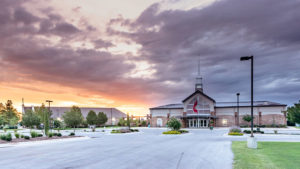
Slowing down helps us see things we ordinarily miss. I live about two miles away from the church campus, and occasionally I’ll walk or run to the office, particularly when I just need to grab something and I can get some exercise at the same time. The first time I ran, I noticed a significant part of the way is uphill—something I’d never noticed in my car at 40 miles per hour. On foot at 4 miles per hour, though, I could certainly tell!
Growing up, I would hear about Christians who read their Bible all the way through every year. Somewhere along the way, I got the idea that this is what good Christians did, and every year as January approached, I would feel like I ought to read the Bible that year. Most of my attempts failed somewhere around the book of Numbers, and I would feel like my faith was lacking because another year would pass, and I had not read the whole Bible that year. Maybe you have felt this way as well.
To read the Bible in a year, you have to average 3.25 chapters per day. That means reading a lot pretty quickly. There is an important place for reading the Bible broadly (this is what we do in Disciple Bible Study), but many of us assume this is the only way to read the Bible, and we never learn to slow down and allow the words to sink in.
Over the weekend, I was struck by a passage from Dallas Willard’s book Hearing God: Developing a Conversational Relationship for God. In it, he discusses how to read the Bible prayerfully. He suggests that we “do not try to read a great deal at once.” This is counter to what many of us would expect, but he continues, “It is better in one year to have ten good verses transferred into the substance of our lives than to have every word of the Bible flash before our eyes.”
He’s right—when we read the Bible, it’s not just to learn information. It’s to allow the Word of God to form us through the words of scripture, and this requires that we read slowly enough to listen. When we slow down, we can allow the Spirit to speak to us in a deeper way. There are many great techniques for reading the scriptures such as lectio divina (you can read more about this practice from one of my teachers, Ruth Haley Barton, here). The main thing, though, is to slow down and listen for the Holy Spirit.
If you’re not sure where to start, Willard suggests “begin[ning] with those parts of Scripture with which we have some familiarity, such as Psalm 23, the Lord’s Prayer, the Sermon on the Mount, 1 Corinthians 13 or Romans 8.” Each of these passages is rich enough for a lifetime of listening.
Prayer
For this morning’s prayer, take a deep breath, and slowly, prayerfully read again Psalm 23:
“The Lord is my shepherd; I shall not want.
He makes me lie down in green pastures;
he leads me beside still waters;
he restores my soul.
He leads me in right paths
for his name’s sake.
Even though I walk through the darkest valley,
I fear no evil,
for you are with me;
your rod and your staff,
they comfort me.
You prepare a table before me
in the presence of my enemies;
you anoint my head with oil;
my cup overflows.
Surely goodness and mercy shall follow me
all the days of my life,
and I shall dwell in the house of the Lord
my whole life long.”